How to Choose the Right Artificial Grass for Landscaping, Sports, and Commercial Projects
Why Choosing the Right Artificial Grass Matters
Artificial grass is now widely used in landscaping projects, football fields, gyms, rooftops, playgrounds, schools, commercial areas, and sports facilities. For contractors, wholesalers, and project buyers, choosing the right artificial turf is important for appearance, durability, safety, and long-term performance.
At Champion Grass, we understand that different projects require different turf specifications. A product that works well for a home garden may not be suitable for a football pitch or a high-traffic gym area. This guide will help buyers understand how to choose the right artificial grass according to application, pile height, yarn type, backing, drainage, and maintenance needs.
- Start with the Application
The first question is simple: where will the artificial grass be installed?
Different applications need different turf structures. Before choosing a product, buyers should clearly confirm the project type, expected traffic, installation area, and performance requirements.
Common applications include:
- Landscaping areas: gardens, parks, balconies, rooftops, villas, commercial decoration, and public green spaces.
- Sports fields: football fields, training grounds, school sports areas, and multi-purpose sports facilities.
- Gym and fitness areas: sled tracks, functional training zones, CrossFit areas, and indoor fitness rooms.
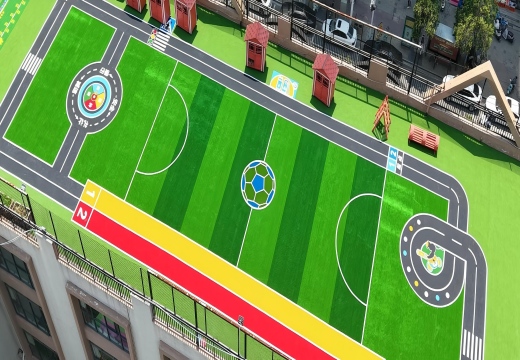
- Playgrounds and schools: kindergarten rooftops, children’s activity zones, and safe outdoor spaces.
- Commercial projects: hotels, shopping malls, exhibition areas, office decoration, and event spaces.
Once the application is clear, it becomes easier to choose the correct pile height, density, backing, and accessories.
- Choose the Right Pile Height
Pile height is one of the most visible differences between artificial grass products. It affects appearance, comfort, performance, and cost.
Common pile height options:
- 10mm–15mm: commonly used for gym turf, putting green, display areas, and decorative use.
- 20mm–30mm: suitable for landscaping, balconies, rooftops, and commercial decoration.
- 35mm–40mm: often used for premium landscape projects and areas requiring a more natural grass appearance.
- 40mm–60mm: commonly used for football turf and sports fields, often combined with silica sand and rubber infill.
For B2B projects, the highest pile height is not always the best choice. A suitable pile height should match the actual project function, budget, traffic level, and installation method.
- Understand Turf Density and Stitch Rate
Density and stitch rate affect how full and durable the turf feels. Higher density usually means a thicker appearance and better wear resistance, but it also increases material cost.
For landscaping projects, a balanced density can provide a natural and soft appearance. For sports fields and gym turf, the density should be selected according to use intensity, player comfort, traction, and maintenance requirements.
When comparing quotations from different suppliers, buyers should not only compare the price per square meter. It is also important to compare pile height, yarn Dtex, stitch rate, density, backing, coating, and warranty conditions.
- Select the Correct Yarn Type
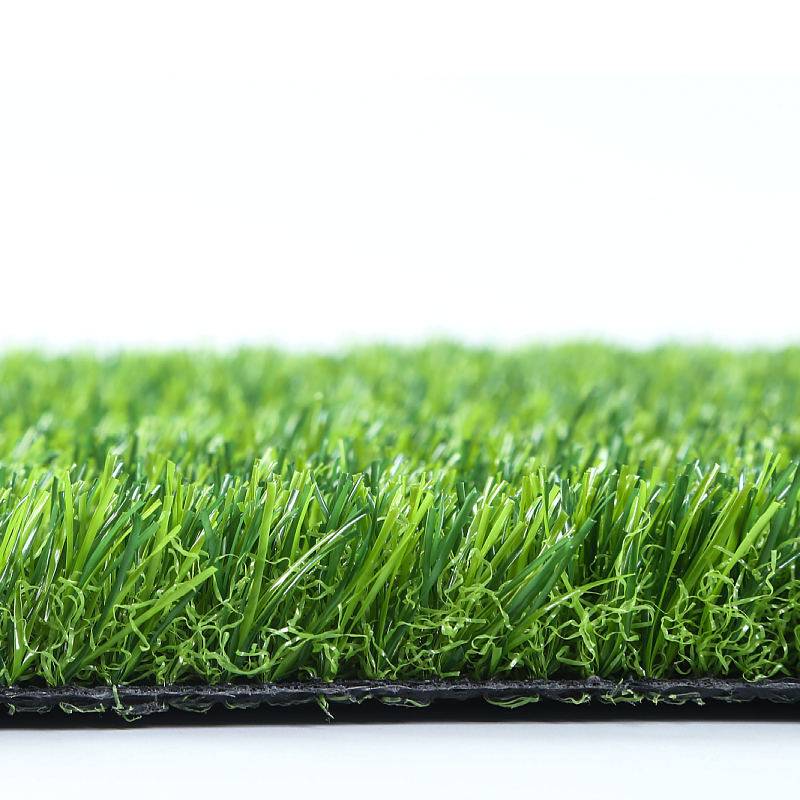
Artificial grass yarn is usually made from PE, PP, or a combination of different materials. The yarn shape and material will influence softness, resilience, standing performance, and durability.
Common yarn options:
- PE yarn: soft touch, natural appearance, widely used for landscaping and football turf.
- PP yarn: firmer and often used in shorter turf, putting green, or some decorative grass.
- Curly yarn: helps improve fullness and support, often used together with straight yarn in landscape turf.
- Monofilament yarn: durable and suitable for football turf and high-performance applications.
For premium projects, buyers may also consider UV resistance, color combination, yarn shape, and long-term color stability.
- Check the Backing and Drainage System
The backing is the foundation of artificial grass. A strong backing helps the turf keep its shape and provides better dimensional stability during installation and use.
Drainage is also very important, especially for outdoor landscaping, rooftops, playgrounds, and sports fields. Good drainage helps water pass through the turf quickly and keeps the surface cleaner and easier to maintain.
Before ordering, buyers should confirm:
- Whether the backing is suitable for the project environment.
- Whether drainage holes are available and evenly distributed.
- Whether the base layer under the turf is properly prepared.
- Whether the installation area has a correct slope for water drainage.
- Do Not Ignore Installation Accessories
A successful artificial grass project is not only about the turf itself. Accessories are also important for final performance and appearance.
Common accessories include:
- Joining tape
- Artificial grass adhesive
- U-nails or fixing pins
- Silica sand
- Rubber granules
- Shock pad
- White line turf for sports fields
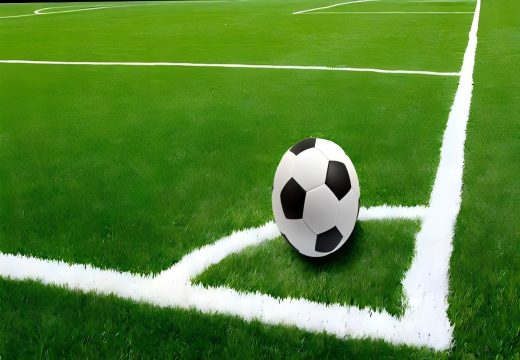
For football turf, infill materials such as silica sand and rubber granules can affect ball roll, shock absorption, traction, and player comfort. For landscaping turf, correct joining and edge fixing can make the final installation look cleaner and more natural.
- Consider Maintenance and Long-Term Use
Artificial grass is low-maintenance, but it is not completely maintenance-free. Regular cleaning and simple maintenance can help extend service life and keep the surface looking fresh.
Basic maintenance tips:
- Remove leaves, dust, and debris regularly.
- Brush the turf fibers when necessary to keep them upright.
- Check seams and edges after long-term use.
- For sports fields, check infill levels and surface flatness regularly.
- Avoid placing very hot objects directly on the turf surface.
For commercial and sports projects, a simple maintenance plan can reduce long-term repair costs and improve user experience.
- Work with a Reliable Artificial Grass Supplier
Choosing a reliable supplier is one of the most important steps for B2B buyers. A professional supplier should not only provide a price, but also help recommend suitable specifications, packing methods, installation accessories, and shipping solutions according to the project.
When evaluating a supplier, buyers can check:
- Product range and customization ability
- Experience with landscaping, sports, and commercial projects
- Clear specification sheets and product photos
- Sample availability
- Production and delivery capacity
- After-sales communication and technical support
A good supplier should help customers avoid wrong product selection and reduce project risks before shipment.
Conclusion
Choosing the right artificial grass depends on the application, pile height, density, yarn type, backing, drainage, accessories, and maintenance requirements. For landscaping, sports, gym, and commercial projects, the best product is not always the most expensive one. The best product is the one that matches the project needs and provides stable long-term performance.
Champion Grass provides artificial turf solutions for landscaping, football fields, gym areas, commercial projects, and customized applications. If you are planning a new artificial grass project, our team can help recommend suitable products and accessories according to your size, application, budget, and shipping requirements.
Contact Champion Grass today to get professional artificial grass suggestions for your next project.
 How to Choose the Right Artificial Grass for Landscaping, Sports, and Commercial Projects
 Artificial Grass Installation for a Kindergarten Rooftop
 Essential Accessories for Football Turf Construction and How to Calculate Their Quantities
 Artificial Moss — Bringing Natural Aesthetics into Modern Spaces